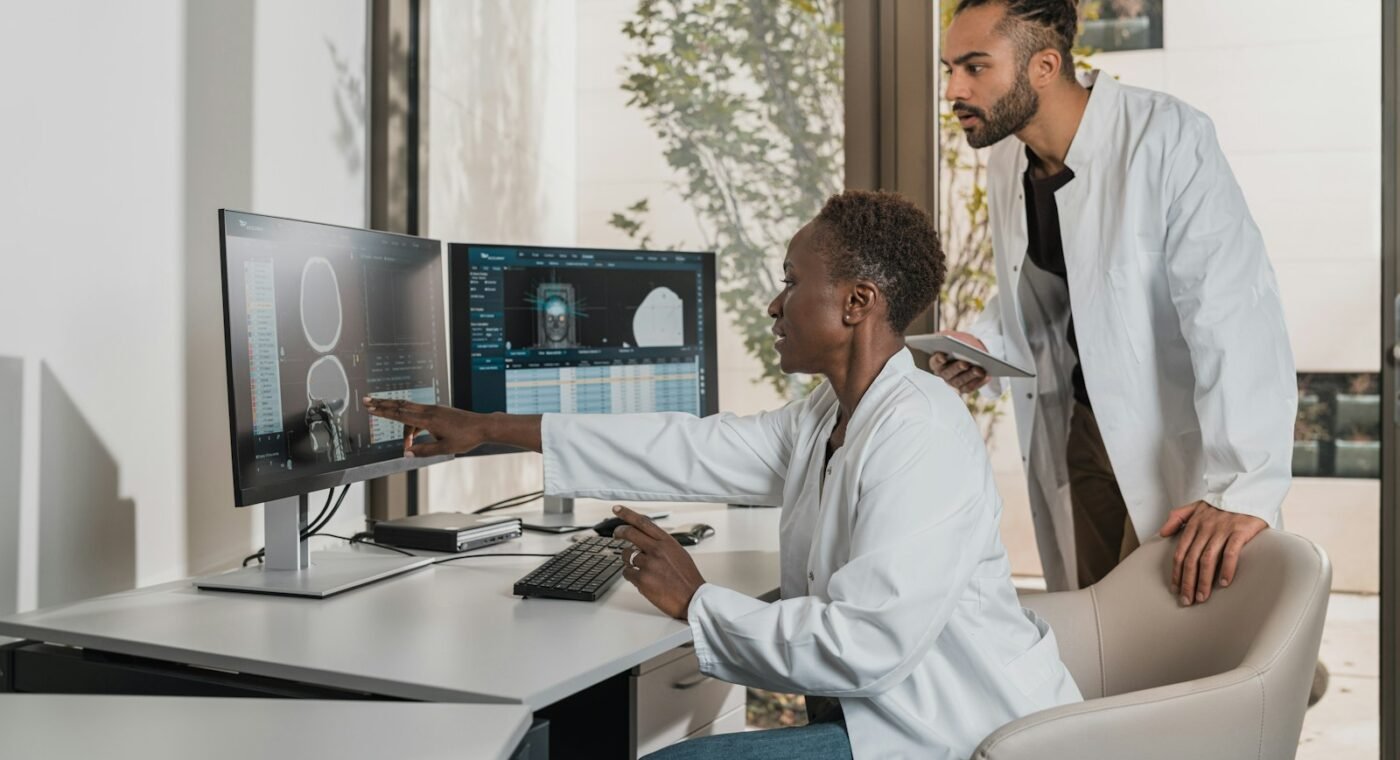
The Fraunhofer Institute for Computer Graphics Research (IGD) in Darmstadt is developing an artificial intelligence system capable of detecting osteoporosis and its precursor stage, osteopenia, before fractures occur. The project, called BMDNow, has Goethe University Frankfurt and an IT company as partners.
The software makes use of routine CT scans that have already been carried out, for example of the heart or lungs, so patients do not need to undergo extra tests. A neural network identifies the spongy area of the vertebrae and the model analyses components such as fat and calcium, producing a colour 3D map of bone density.
At present, the reference test is usually only ordered when bone loss is already suspected. “We run our algorithm on the available images and get a bone density analysis practically as a by-product,” explains researcher Stefan Wesarg.
The team highlights patients’ reduced exposure to radiation and the time saved for doctors. The aim is to obtain approval as a medical device within one to two years.