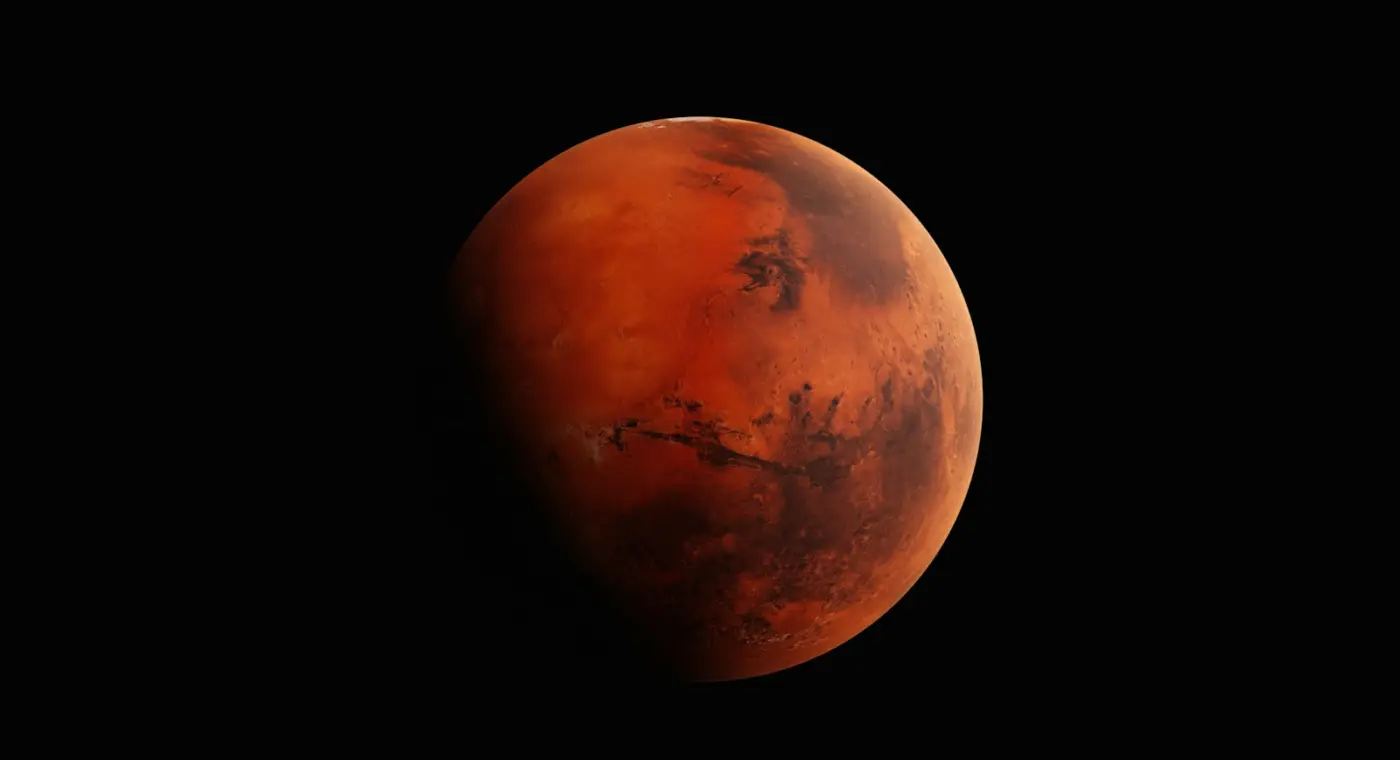
A water-ice cloud that appears every morning beside the 20 km-tall Martian volcano Arsia Mons can stretch up to 1,800 km — nearly twice the length of the UK. It was discovered in 2018 by the European Space Agency’s Mars Express.
A study published in Nature Geoscience and led by Jorge Hernández-Bernal of LMD/CNRS/Sorbonne Université in Paris finally reproduced it in simulations by adding a rarely considered process: homogeneous nucleation, in which water vapour freezes directly into ice without dust particles.
This process had never been observed in a planetary atmosphere. It requires extreme humidity, over 100,000 times typical Earth levels, produced by a large wave that lifts moist air several kilometres in minutes and cools it by about 30 degrees in 10 minutes.