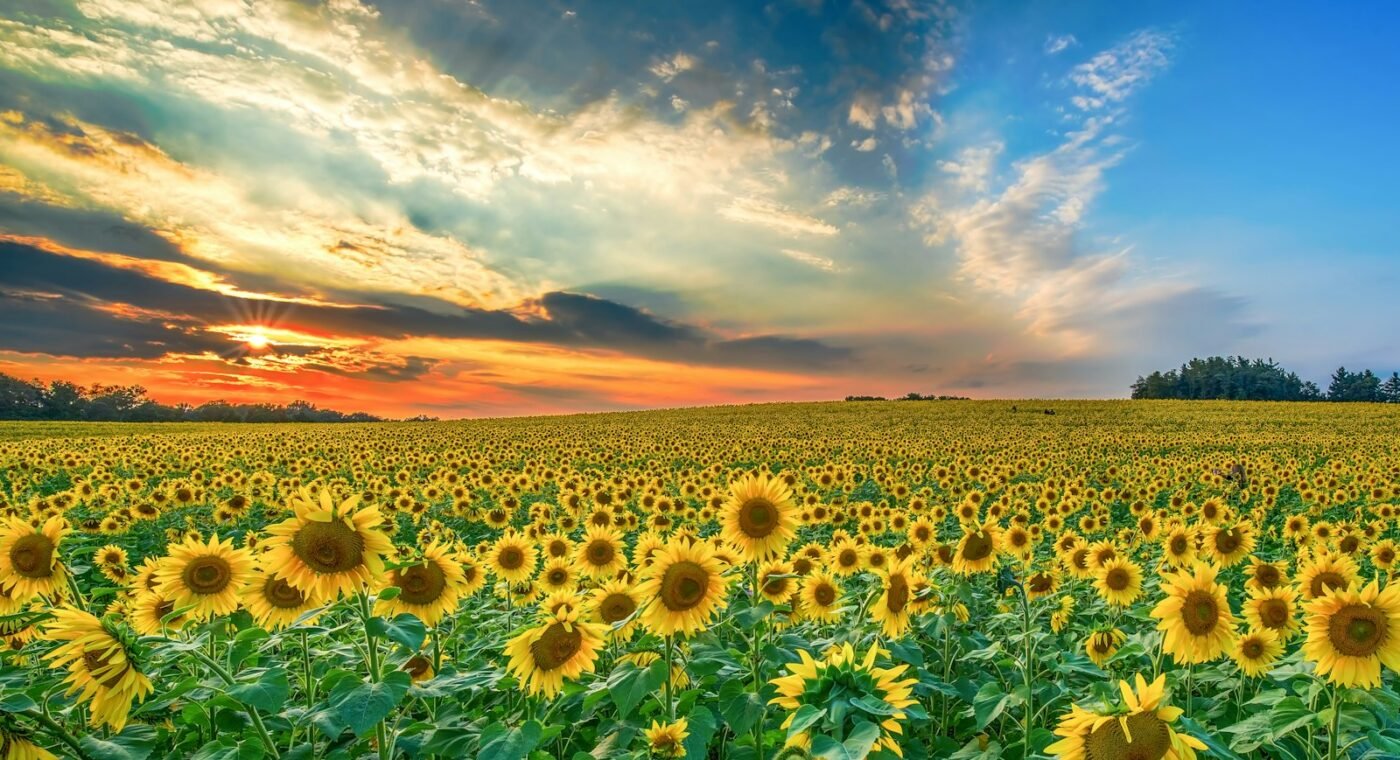
The European HelEx project, coordinated by Nicolas Langlade of the French agricultural research institute INRAE, is developing more drought-tolerant sunflowers. It brings together 17 partners, including researchers, seed companies, biotech firms and farmers.
The team searched wild sunflower populations in arid parts of the United States, picked the most drought-tolerant and crossed them with commercial European varieties, combining conventional breeding with gene editing. It also identified genes linked to protein content and nectar.
According to the project, about 75% of the world’s sunflowers are grown in continental Europe, and the seeds contain about 43% oil and 17% protein. A variety designed for pollinators produces six times more nectar and pollen than conventional ones.
Final field trials are under way in France, Germany, Hungary, Romania and Serbia. A new variety is being registered and is expected to be available in 2028.