Physicist Sergejus Balčiūnas of the Institute of Applied Electrodynamics and Telecommunications at Vilnius University, Lithuania, is leading a three-year project on two-dimensional hybrid perovskites. He is working with Professor Mirosław Mączka of the Polish Academy of Sciences’ Institute of Low Temperature and Structure Research, alongside students and a postdoctoral researcher.
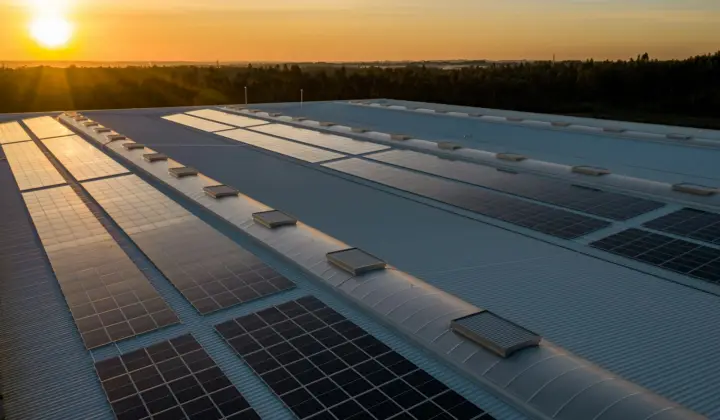
Perovskites are promising solar cell materials: those made with methylammonium lead iodide already exceed 25% efficiency, but poor durability hampers industrial use. The team will study how mixing different ions changes the structure, electrical properties and stability of layered versions, using dielectric spectroscopy from millihertz to gigahertz. Polish partners will prepare the crystals and run initial X-ray analyses.
The project has almost €350,000 from the Research Council of Lithuania’s “My First Research Team” scheme and will host three visiting researchers. For now it is a project announcement: there are no published results yet, and the benefits are goals rather than findings.