An international team led by Rudolf Dellmour of the University of Vienna, including Roman Garba and Viktor Černý of the Czech Academy of Sciences’ institutes of archaeology and nuclear physics, has published a study in Nature on the prehistoric settlement of the Arabian Peninsula. Researchers from the UK, the US, Oman and the University of Algarve in Portugal also took part.
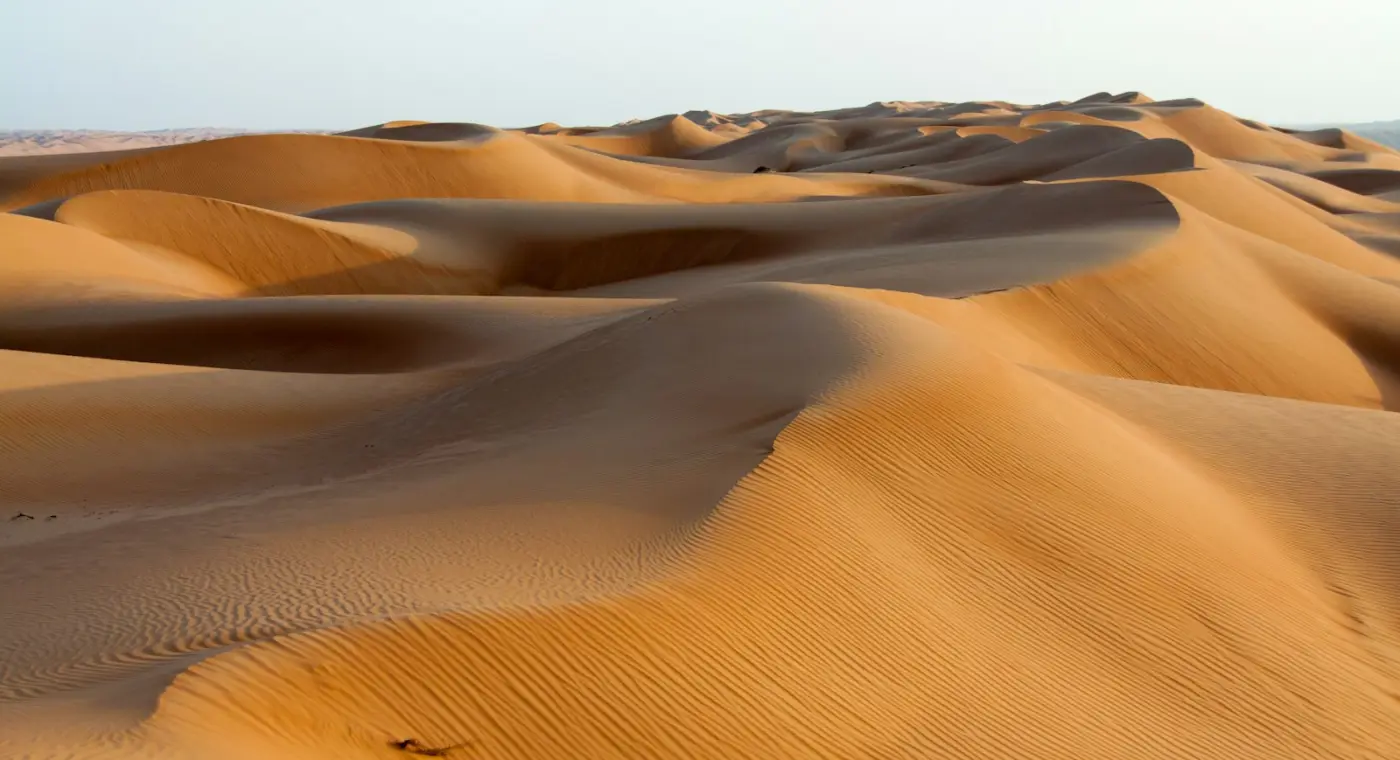
During the Pleistocene, monsoon rains made Arabia greener, with freshwater lakes. But the study shows water alone was not enough: without suitable stone for making tools, the interior remained uninhabited. On a roughly 1,500 km traverse of the Rub’ al Khali desert, the team found traces of ancient lakes but no stone tools or raw materials.
The researchers built an open-source model combining water availability with rock geology to predict where people dependent on stone tools could live permanently in arid regions. Its predictions were checked against prehistoric sites found during fieldwork in southern Oman between 2022 and 2025, and the data and code are freely available.