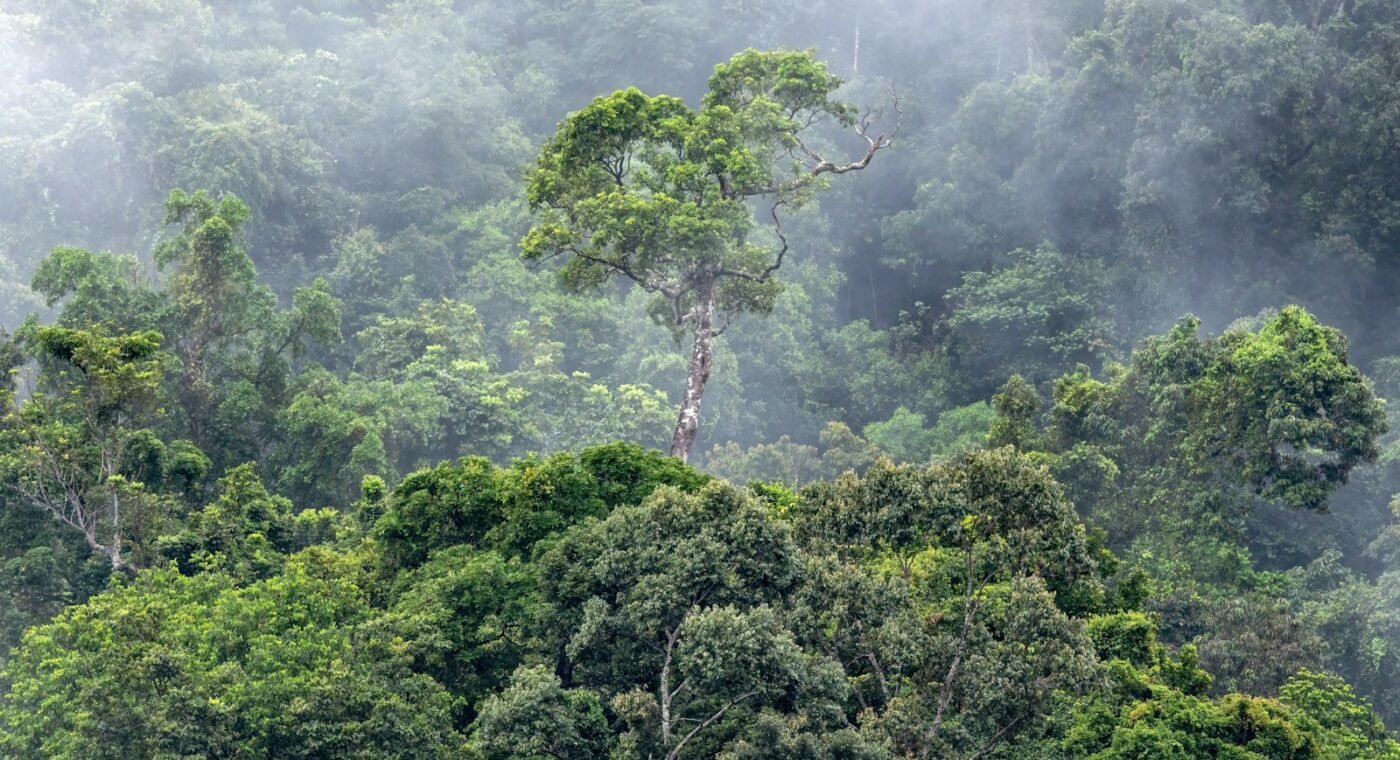
A study led at the Luiz de Queiroz College of Agriculture (Esalq) of the University of São Paulo shows that the natural regrowth of tropical forests helps hold back non-native and invasive trees. The work, published in Nature Plants, has Angelica Faria de Resende as first author and involved around 60 institutions.
The scientists analysed 1,561 plots of secondary forest, which grows back on abandoned land, in ten countries including Brazil, Mexico, Colombia and Peru. Instead of following the same site for decades, they compared areas of different ages, from recently abandoned land to mature forest.
In the first 10 to 20 years, non-native species make up as much as 28% of trunks in wetter forests and 9% in dry forests. After that they decline: native trees grow and cast shade, and the non-natives, which need full sun, survive only in small numbers. Of 3,735 species identified, 131 were non-native but not invasive and 11 were invasive.
The authors present natural regrowth, in landscapes that keep forest around them, as a nature-based solution to control non-native species and protect biodiversity. The study was funded by FAPESP, through its BIOTA programme, and by the Dutch Research Council (NWO).