Researchers from the Department of Microbiology and Cell Biology at the Indian Institute of Science (IISc), in Bengaluru, have created a method that uses blue light to switch on a key part of cell division. Called LISA, it was published in EMBO Reports and announced by IISc on 29 September 2026.
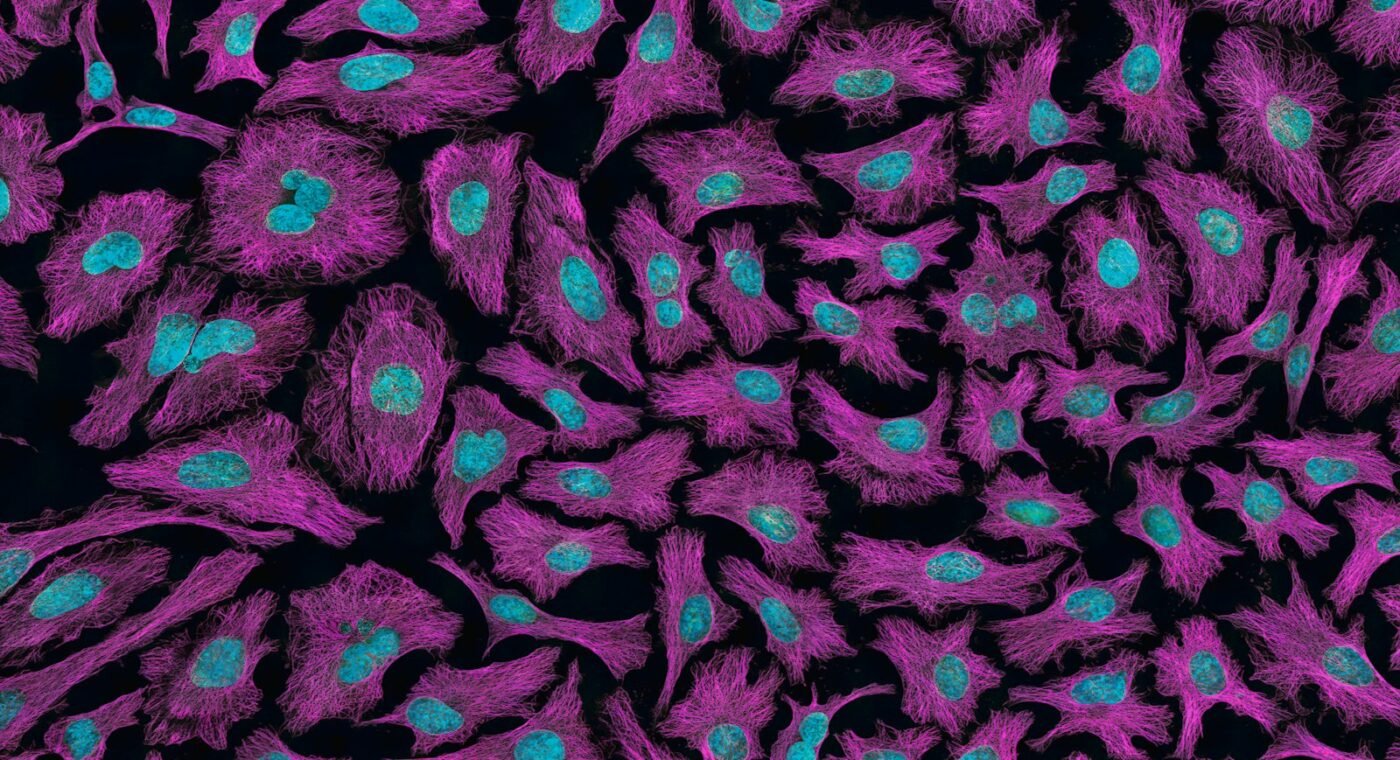
When a cell divides, it builds a structure called the spindle, which shares the genetic material between the two daughter cells. Building it depends on the enzyme Aurora A. The team fused it to a light-sensitive plant protein: under blue light the molecules cluster, the enzyme is activated and the spindle starts to form. When the light is switched off, the effect fades.
In human cells whose centrosome, the structure that normally organises the spindle, had been removed, blue light allowed the spindle to be built again and corrected the division problems. Unlike earlier methods, which worked mainly in frog egg extracts, LISA works in living cells and in several cell types.
The work was led by Professor Sachin Kotak, with PhD student Vignesh Olakkal as first author. Aurora A is overproduced in many solid tumours, and the team hopes the method will help design more precise drugs. So far the tests have only been carried out in human cells in the laboratory.