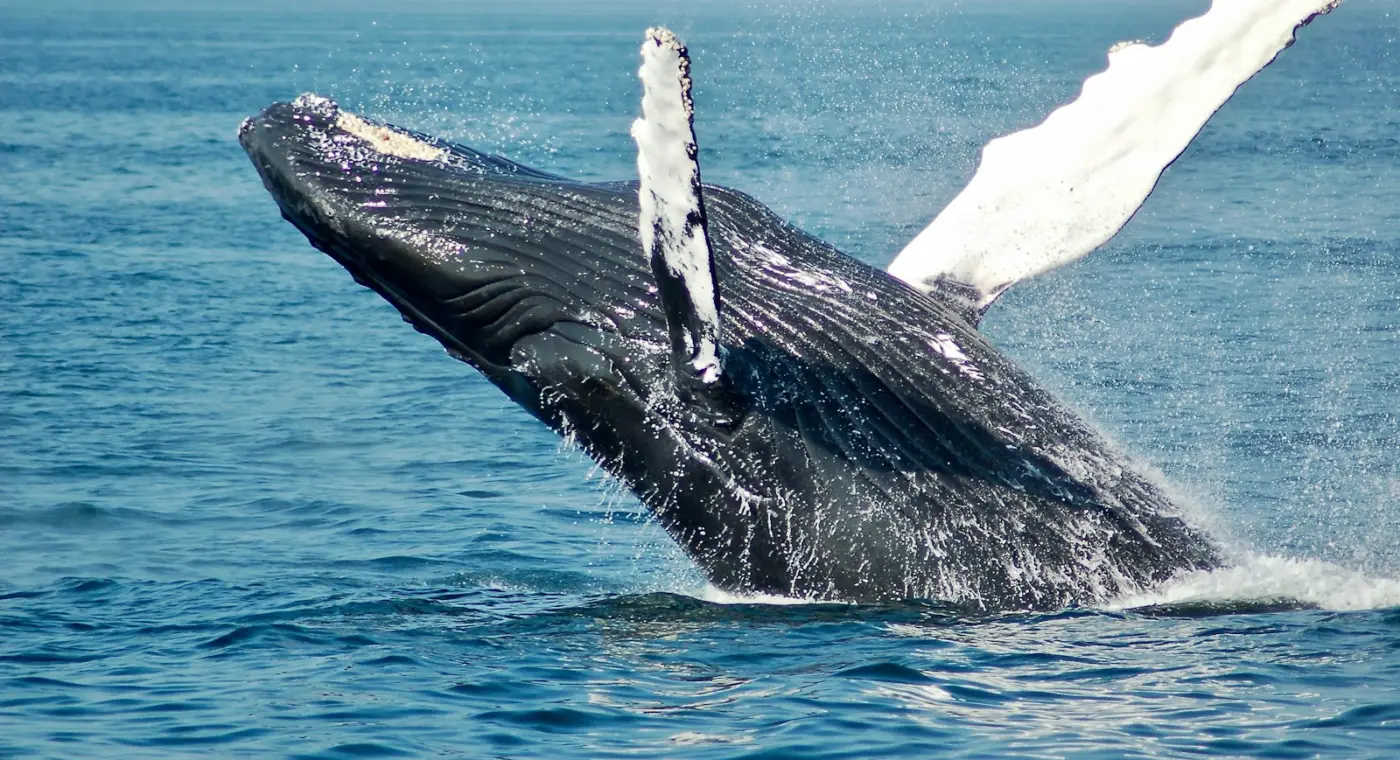
Research led by Éadin O’Mahony of the University of St Andrews in Scotland has shown that whole whale genomes can be sequenced from “blow” — the spray of air and mucus whales exhale at the surface. The study was published in Molecular Ecology Resources.
The team used drones to collect 58 blow samples from 26 humpback whales in Gitga’at territory, British Columbia (Canada). About 84% of the DNA collected was whale DNA. The genomes matched those from biopsies, showed little inbreeding, correctly identified the animals’ sex and revealed three new mitochondrial variants.
The method avoids touching or injuring the animals, which could make whale research and conservation easier. The nuclear genomes obtained are still low-coverage, meaning they carry less detail than those from tissue samples.