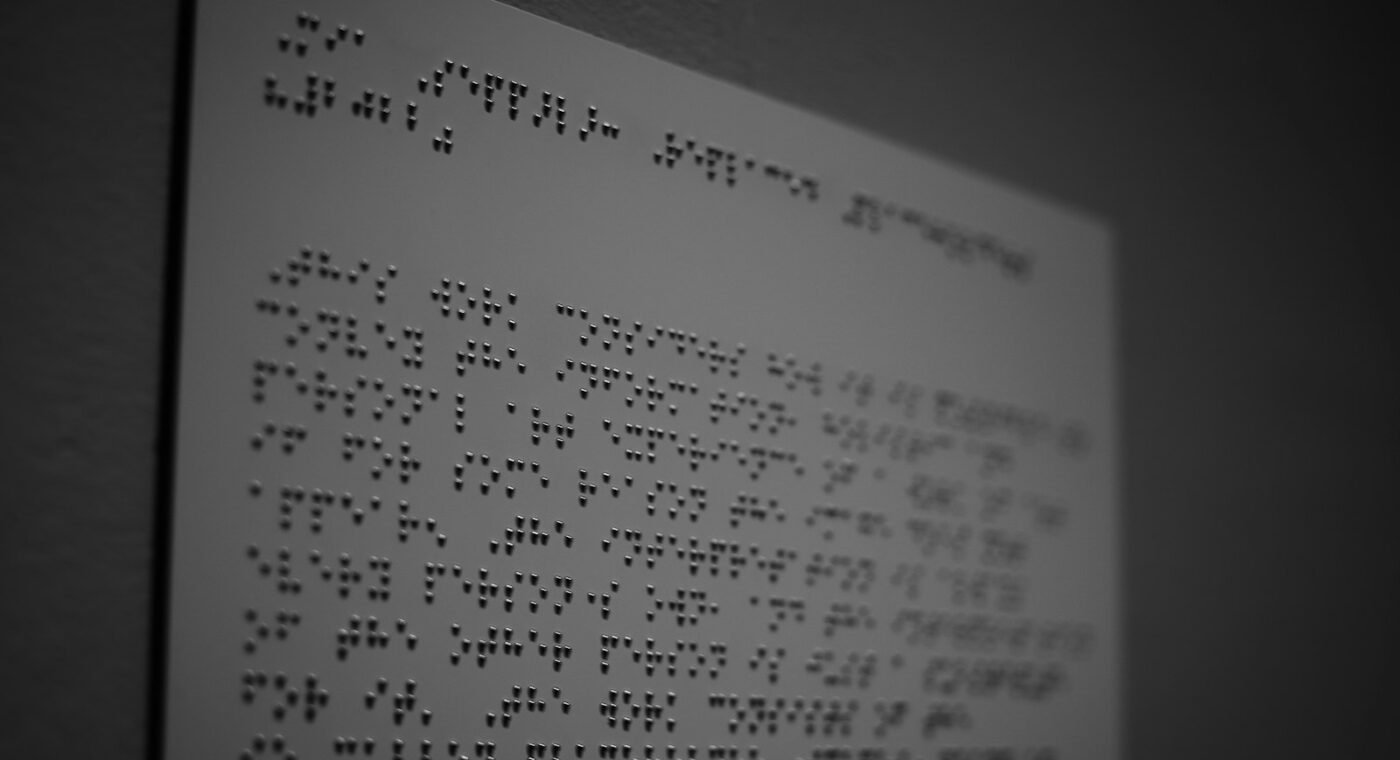
The exhibition “From dots to the world: 100 years of Korean braille” is open, with free admission, until 14 February 2027 at the National Museum of World Writing Systems in Incheon. It is organised jointly with the National Hangeul Museum and the Songam Braille Library.
Korean braille grew out of the work of teacher Bak Du-seong, who from 1913 taught blind pupils at a public institute. With the help of the students themselves, he tested 12 versions before proclaiming the “Hunmaengjeongeum” system on 4 November 1926, following three principles: use fewer dots, make learning easier and avoid confusion.
The original 1926 chart, which according to curator Gu Dan-bi was the result of six years of research, is registered as national cultural heritage. The exhibition also features Bak’s manuscripts and diaries, as well as a 1949 weekly magazine printed on recycled paper so that blind readers could keep up with the news.
The visit has been designed to be accessible: it includes information in Korean, braille, English and Japanese, an audio guide, tactile models and handrails. Visitors can leaf through tactile books and write their own name in braille, in an exhibition whose central message is “a world everyone can read together”.