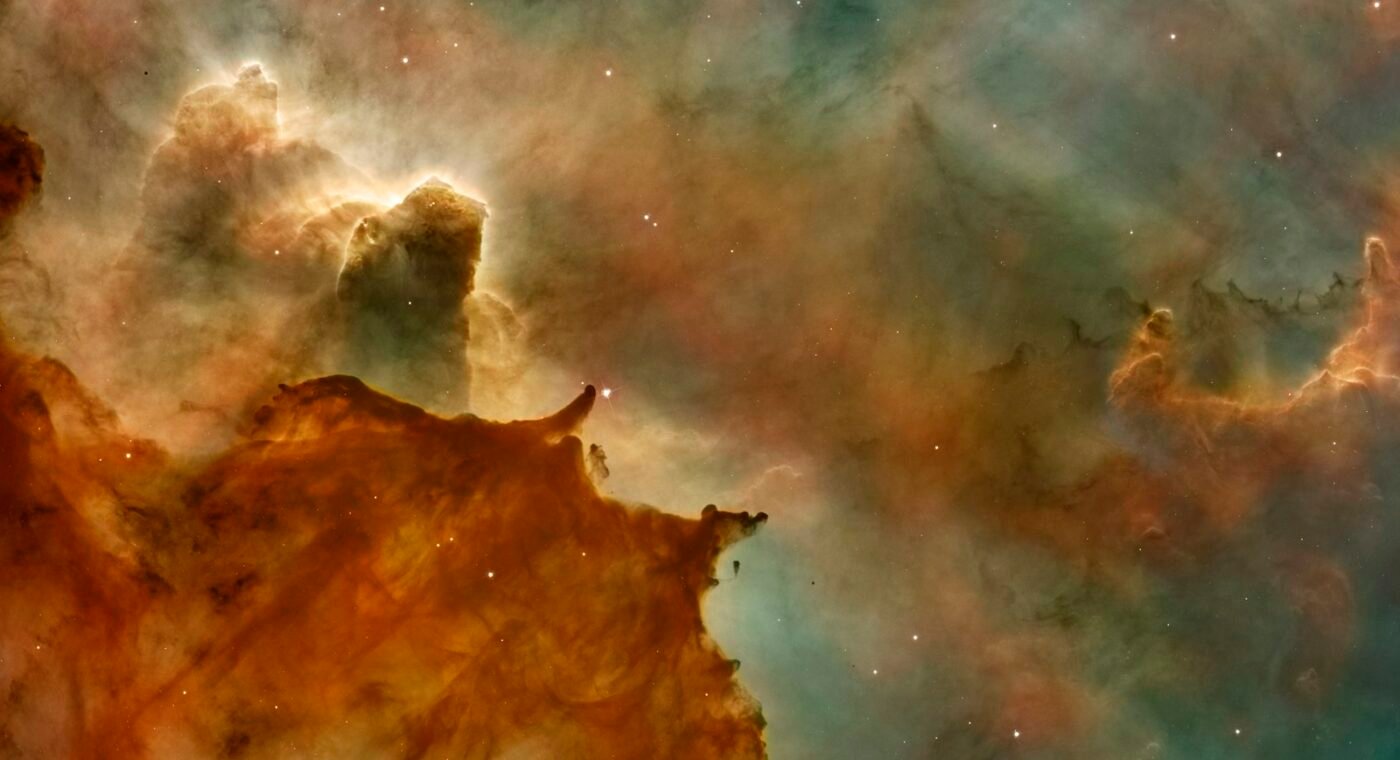
The James Webb Space Telescope, a collaboration between NASA, ESA and the Canadian Space Agency, has revealed one of the largest images ever made public: the IC 348 star-forming region, located around 1,000 light years away in the constellation Perseus.
Using the NIRCam and NIRSpec instruments, the team identified brown dwarfs with only twice the mass of Jupiter, about 0.19% of the mass of the Sun. They are the least massive known, and their existence challenges models of star formation.
One of these lightest brown dwarfs shows signs of a disc around it, suggesting that planets could be forming around an object with a mass similar to that of a planet. The researchers also detected a hydrocarbon signature that has only been observed in the lowest-mass brown dwarfs, which could form a class of their own.
In the upper right corner of the image, forming stars with jets of material can also be seen, such as the objects HH 797 and HH 211. The observations are part of Webb programme 4866, led by K. Luhman and C. Alves de Oliveira.