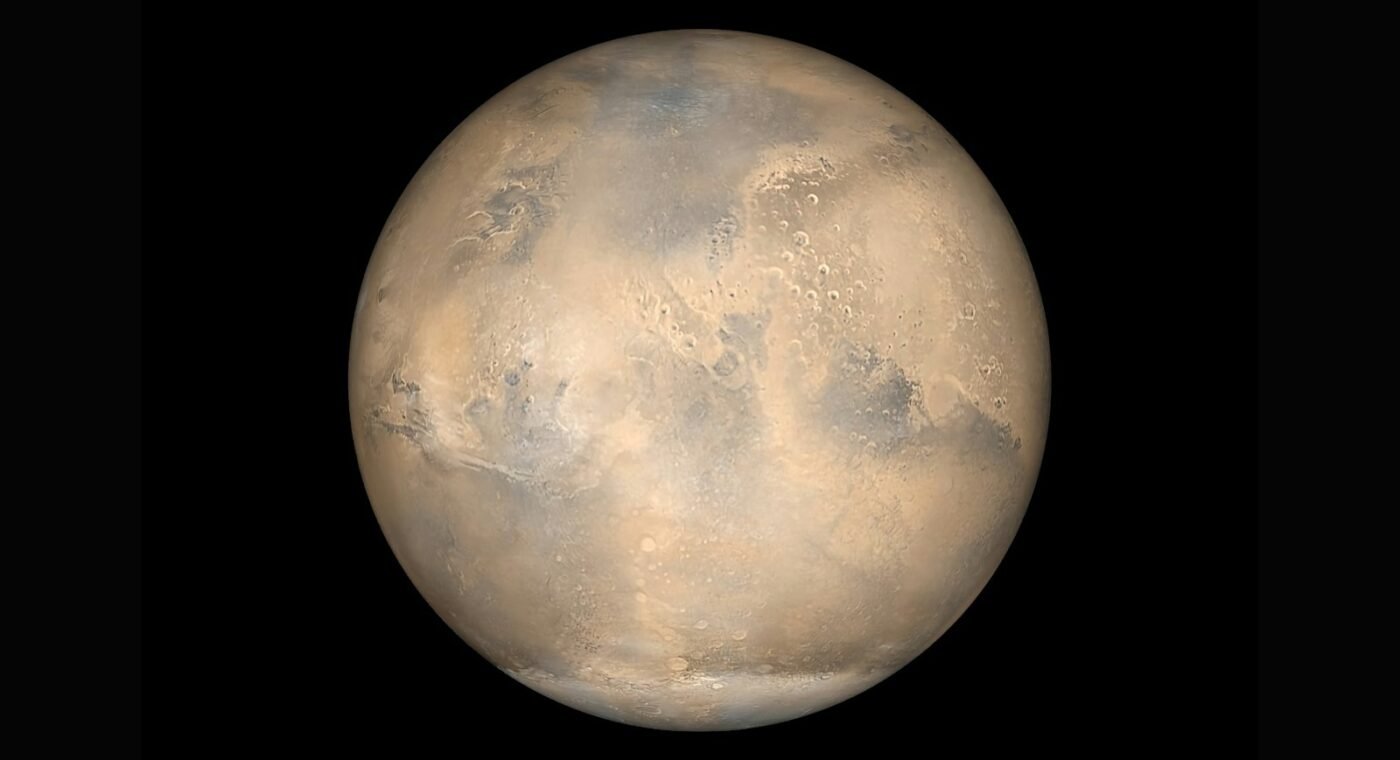
Researchers from Tohoku University, the Earth-Life Science Institute and the Institute of Science Tokyo simulated conditions on early Mars, around 3.8 to 3.6 billion years ago, when the planet may have had rivers, lakes and perhaps an ocean. The aim was to understand where formaldehyde, a molecule that in water can give rise to sugars and amino acids, would have been deposited.
Water vapour proved to be the main factor: ultraviolet light split water molecules and released hydrogen that helped form formaldehyde in the atmosphere, and rain then carried it down to the ground. The wettest regions would therefore have received more of this substance.
According to the model, mountainous areas such as Tharsis and Elysium would have received around ten times the global average. The map compares these spots with the sites where robotic explorers have already landed.
The study, published in The Planetary Science Journal, estimates how much formaldehyde reached the surface in the past, not how much remains today. The first author, Shungo Koyama, believes the work could help select promising targets for future missions to Mars.