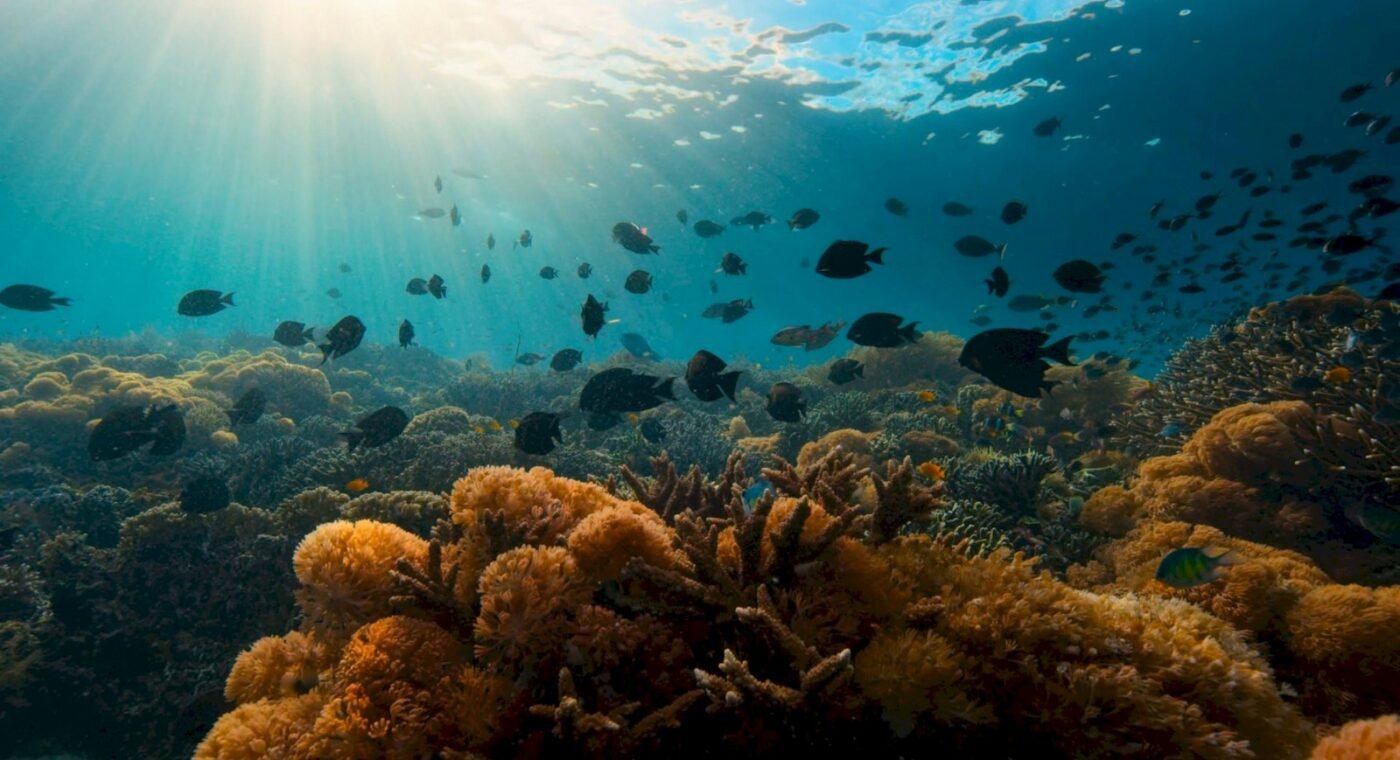
Researchers at the Scripps Institution of Oceanography, University of California San Diego, have shown that playing the sounds of a healthy reef underwater can help degraded coral reefs recover. The tests took place in Kāneʻohe Bay, Hawaii, during several spawning periods in 2023 and 2024.
The team recorded the sounds of a living reef, including fish, shrimp and other organisms, and broadcast them through an underwater speaker from sunset to sunrise for two weeks. Around it they placed 37 artificial structures. Those closest to the speaker received the most coral larvae, especially those coated with a “reef ink” containing living bacteria.
In a second study, autonomous cameras showed that the site with sound attracted between 4 and 14 times more fish larvae than a control site, even when the speakers swapped positions. Fish matter because some species eat the algae that make it harder for corals to settle.
The results were published in Communications Biology and Scientific Reports and will be applied to a 50-metre hybrid reef planned off Oʻahu, combining engineering and biology to protect the coastline.