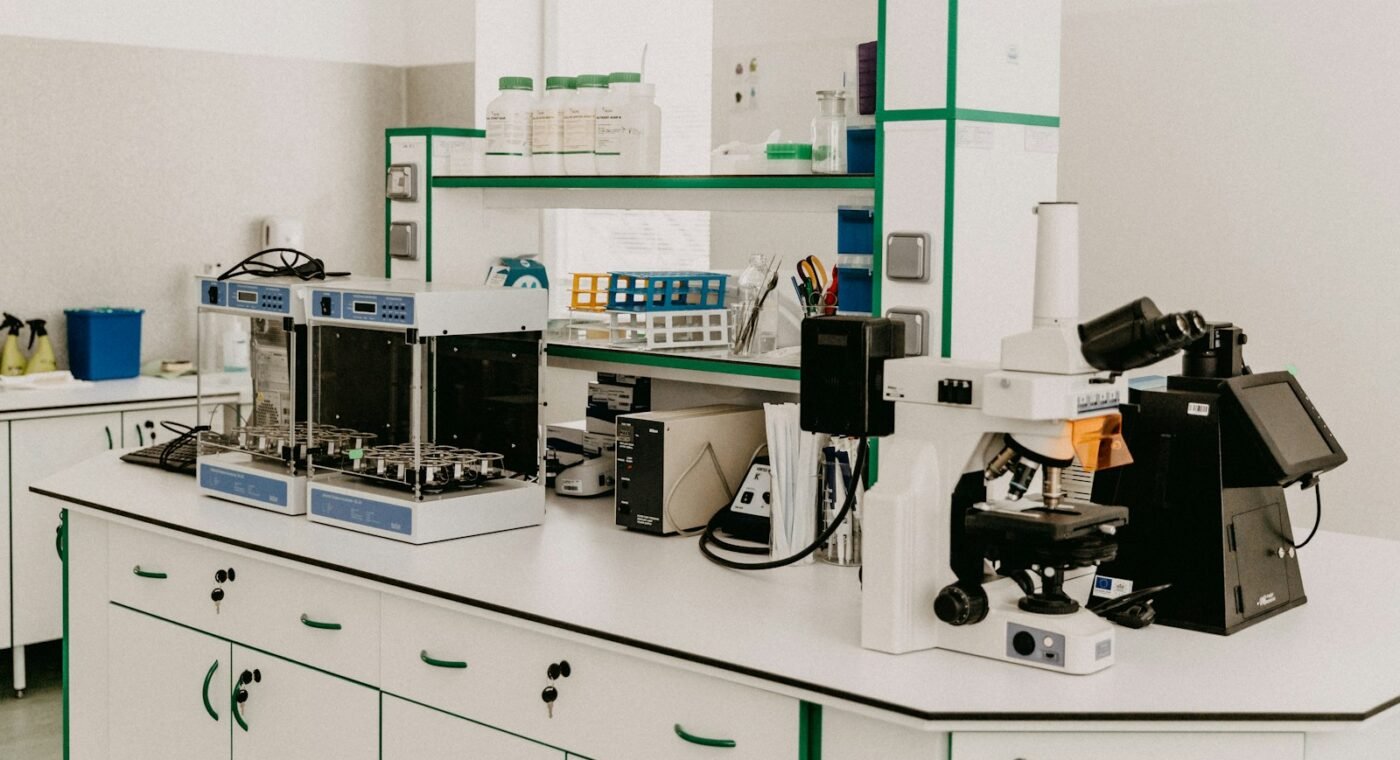
Amphistar, a company that grew out of Ghent University, develops surfactants from organic waste through microbial fermentation. Surfactants are molecules that reduce the tension between liquids such as water and oil, and are used in detergents and cosmetics. Most currently come from petrochemicals.
In the process, sugars and fats are extracted from the waste to feed the yeast Starmerella bombicola, first isolated from bumblebee honey. The yeast produces sophorolipids, which act as surfactants. Process engineer Bent Smets monitors fermentation in a bioreactor, and the aim is to scale up from a few cubic metres to industrial level.
According to the company’s own life-cycle analysis, sophorolipids made from waste emit up to four times less CO2 than those made from virgin raw materials, and up to six times less than SLES, a common petrochemical surfactant. Many bio-based alternatives rely on palm oil, coconut oil or cane sugar, which are linked to deforestation.
Financial director Wim Allegaert estimates the surfactant market at around 20 to 30 million tonnes a year, roughly 85% of it from fossil or palm oil sources. The Belgian-Luxembourg industry association DETIC stresses that companies want to cut their dependence on petrochemicals and secure local supplies.